The Tax Call Every Founder Skips (And What It Costs Them)
By Imran Baig, CPA — Founder, Fast Close AI
This spring I got on a call with a founder whose AI startup had just closed a large seed round. Small team. Pre-revenue. Moving fast.
When an investor had asked for a P&L the year before, he sent them a screenshot of the bank account.
When the company incorporated, he filed the tax return himself — "I just put zeros everywhere."
And when his payroll provider flagged that he might qualify for an R&D tax credit worth roughly $25,000, his honest reaction was: "I don't know if that's worth allocating energy toward. There's so much we're trying to accomplish right now."
I hear a version of this on almost every founder call. And I get it — product velocity is what raises rounds. But here's what I told him, and what I want to show you with real numbers: that credit was likely worth far more than $25K, and the decisions he made in the 90 days around his raise would determine whether his eventual exit gets taxed at 0% or at full capital gains rates.
Let me show you the difference through two founders.
A Tale of Two Founders
Both are AI startup founders. Both are raising. Same product quality, same traction.
Founder A runs on the mentality: "Let's just move fast — I don't have time to think about taxes or accounting." No QSBS planning before the raise. No R&D documentation. A DIY tax return with zeros in every box. The bank account screenshot is the financial reporting system.
Founder B spends a few hours with a CPA before the round closes. Verifies QSBS eligibility. Confirms stock gets issued while the company is still under the asset threshold. Sets up contemporaneous R&D records from day one. Has clean, reconciled books when diligence starts.
Two years later, Founder A is paying a firm to retroactively reconstruct R&D records, discovering that stock issued in a later round missed the QSBS window, and explaining messy books to a lead investor's diligence team.
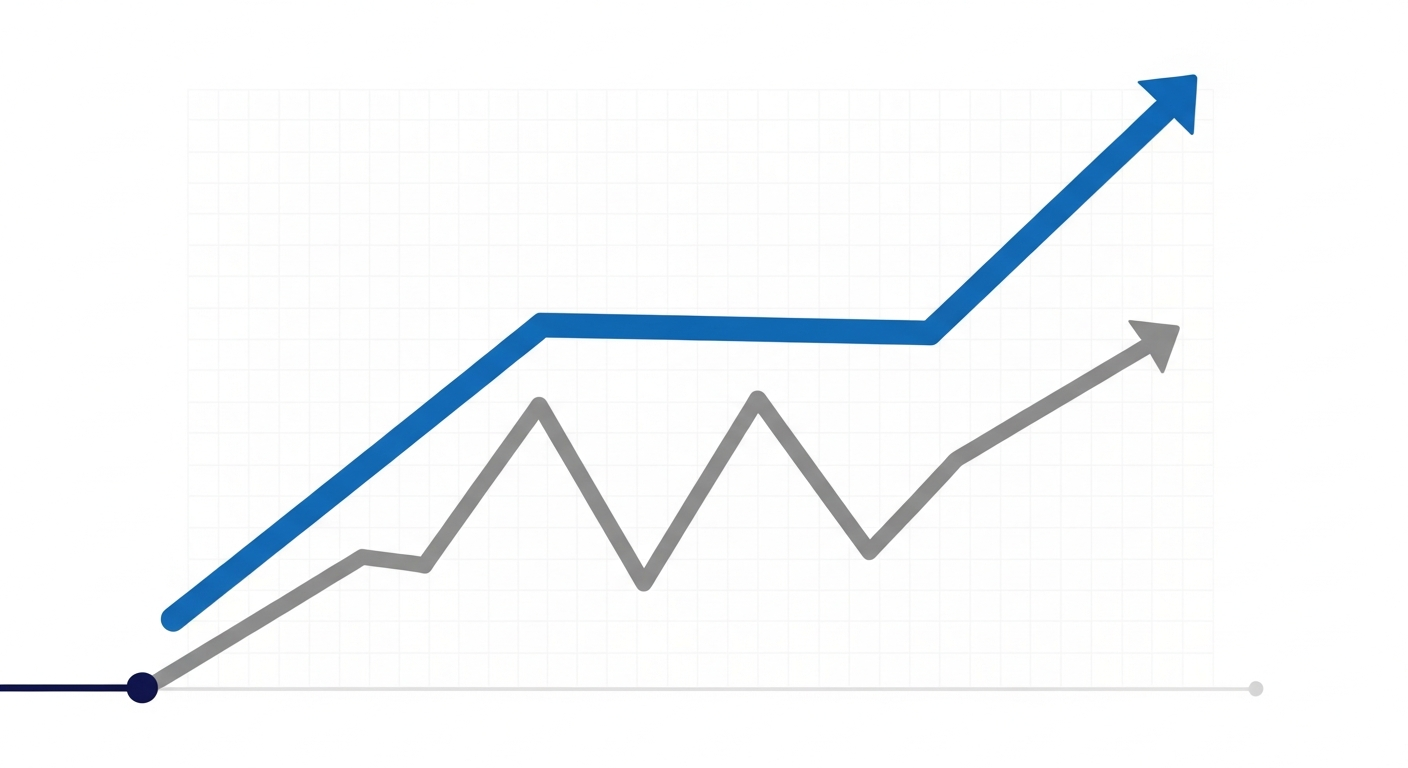
Founder B is stacking exclusions and extending runway with credits that hit before the company is even profitable.
Same companies. Wildly different after-tax outcomes. Here's the mechanics.
QSBS in 2026: Bigger Than Ever — But Timing Is Everything
Qualified Small Business Stock under Section 1202 is the single most valuable tax provision most founders have never planned around. And the One Big Beautiful Bill Act (OBBBA) just made it substantially bigger for newly issued stock:
- The asset ceiling rose from $50M to $75M. Your company's aggregate gross assets must stay under $75 million before and immediately after your stock is issued (with inflation adjustments after 2026).
- The per-issuer gain cap rose from $10M to $15M. That's up to $15 million of exit gain per taxpayer that can escape federal capital gains tax entirely.
- Holding periods are now phased. For post-OBBBA stock: hold 3 years for a 50% exclusion, 4 years for 75%, and 5 years for the full 100%.
Now, the nuance that trips up almost everyone — including the original version of this story: you don't "lose" QSBS because your company later grows past $75 million. The gross-assets test is measured at issuance. Stock you received when the company was worth $5M keeps its QSBS status even if the company becomes a unicorn.
What actually kills QSBS is timing your issuances wrong. If your Series A pushes assets past $75M, stock issued after that round — new founder grants, advisor shares, your own follow-on purchases — will never qualify. The window closes and it doesn't reopen.
That's why "I'll deal with taxes after we raise" is precisely backwards. The raise is the event that can close the window.
The other requirements founders should verify early: you need a domestic C corporation, stock acquired at original issuance, 80% of assets in an active qualified business, and you can't be in an excluded field (consulting, financial services, law, accounting, and a few others). A one-hour eligibility check before the round beats an unfixable problem after it.
Trust Stacking: Multiplying the $15M Exclusion
Here's where planning-forward founders separate from the pack. Section 1202(h) allows QSBS to transfer by gift while keeping its qualified status and original holding period.
Because each properly structured non-grantor trust is generally treated as a separate taxpayer, gifting QSBS to trusts for family members can multiply the exclusion. Founder, spouse's trust, children's trusts — each with its own cap. This strategy, often called "stacking," has grown dramatically in recent years for exactly this reason.
Two caveats from the practitioner literature: grantor trusts generally don't create a separate exclusion (they're taxed as you), and aggressive stacking with cookie-cutter trusts draws IRS scrutiny. Design matters — distinct beneficiaries, thoughtful timing, real substance. But done right, a founder heading toward a $40M exit can shelter dramatically more than $15M.
The catch? Stacking works best when shares are transferred early, at low valuations. Another door that closes as you grow.
R&D Credits: The Runway Extension Hiding in Your Payroll
Back to that founder who almost waved off the R&D credit. Here's what changed in 2025–2026 that makes this a genuine cash-flow strategy, not a compliance chore:
- Domestic R&D is immediately deductible again. New Section 174A restored full expensing of U.S. research costs (foreign R&D still amortizes over 15 years — relevant if you're weighing offshore engineering).
- You may be able to amend prior years. Small businesses meeting the gross receipts test can elect retroactive expensing back to 2022 by filing amended returns — for some startups, that's an immediate refund check.
- Pre-profit startups can take the credit against payroll taxes. Under Section 41(h), qualified small businesses can apply the research credit against payroll tax. You don't need to be profitable to benefit. Every quarter, real cash stays in the company. That's runway.
The reason startups underclaim these credits isn't eligibility — it's documentation. The IRS requires contemporaneous records of qualified research activities. Records built as you go cost almost nothing. Records reconstructed two years later cost real money and survive audits poorly. This is the whole game: the benefit goes to founders who set up the system before they need it.
Why Investors Actually Care
Here's the part founders underestimate. On a recent call, an investor put it to me plainly: when he's deciding between two comparable startups and one has its financial and tax house in order while the other is purely growth-focused, it absolutely influences the decision.
It's not that VCs are excited about your chart of accounts. It's what clean books and preserved tax attributes signal:
- Diligence goes faster. Reconciled accounts and documented credits mean fewer surprises and fewer delayed closings.
- QSBS benefits investors too. Their stock in your C-corp can also qualify — a founder who protected the QSBS window protected their investors' after-tax returns.
- It reads as operational maturity. A founder who handled the unglamorous stuff early is a founder who'll handle a thousand other unglamorous things.
Tax planning isn't a compliance burden. It's a competitive fundraising advantage that compounds at exit.
The 90-Day Founder Tax Checklist
If you're within a year of raising, here's the short list:
- Verify QSBS eligibility now — entity type, original issuance, active business test, asset level.
- Issue stock before the raise pushes assets past $75M — the window is measured at issuance and never reopens.
- Consider gifting shares to non-grantor trusts early, while valuations are low.
- Stand up contemporaneous R&D documentation — time logs, project records, tied to payroll.
- Check whether you can amend 2022–2024 returns for retroactive R&D expensing.
- Elect the payroll tax offset if you're pre-profit.
- Get real books — a reconciled QuickBooks file, not a bank screenshot.
None of this slows product down. Most of it is a few focused hours with the right advisor. All of it is worth multiples of the effort at exit.
Frequently Asked Questions
Does my company lose QSBS status if it grows past $75 million?
No. The gross-assets test applies at the moment stock is issued. Existing qualified stock keeps its status. But stock issued after you cross $75M won't qualify — which is why issuance timing around fundraises is critical.
How long do I have to hold QSBS?
For stock issued under the new OBBBA rules: 3 years for a 50% exclusion, 4 years for 75%, 5 years for 100%.
Can I claim the R&D credit if my startup isn't profitable?
Yes. Qualified small businesses can elect to apply the credit against payroll taxes, generating cash benefit before profitability.
Do LLCs qualify for QSBS?
No — QSBS requires a domestic C corporation. This is a major factor in startup entity choice.
Is QSBS stacking with trusts legal?
Yes, when properly structured with non-grantor trusts. Design and substance matter; aggressive cookie-cutter arrangements draw scrutiny. Work with an advisor.
Imran Baig, CPA is the founder of Fast Close AI, an AI-native tax and advisory firm serving startup founders and businesses in all 50 states — from QSBS planning and R&D credits to clean, investor-ready books. Book a founder tax planning call.
This article is general information, not tax advice for your specific situation. Tax law changed significantly under P.L. 119-21 (OBBBA); consult a CPA before acting.